
Are you a Windows fan who likes getting sneak peeks at features before they’re released to the public? Microsoft created its Windows Insider Program for you.
The program made its debut in October 2014 with the release of the Windows 10 technical preview. It provided a way for enthusiastic users, developers, and IT admins to test out — and, notably, give feedback on — the upcoming OS. After Windows 10 shipped, Microsoft kept the program going, and Insiders have had early access to new features being developed for all subsequent Windows 10 and Windows 11 versions, via releases known as Insider Preview Builds.
The Insider program has gone through numerous changes since those early days, with an increasingly complex array of options (“channels”) to designate what types of preview builds you want to get your hands on. But the purpose has remained the same: to give you a way to see upcoming features, report bugs, share your thoughts, and make suggestions for how to improve those features while they’re still being developed.
Earlier this year, the company gave the Insider program its biggest overhaul ever, with the stated goal of making it less confusing for participants. So even if you think you know about Insider channels and how to handle them, if you haven’t checked recently, you’re out of date.
In this article, we’ll explain how to handle Windows 11 previews and how to choose the right Insider channel for you. Note that you must be running Windows 11 to participate in the Insider program; there is no longer an Insider program for Windows 10.
We’ve divided the piece into two sections, one for individuals and one for IT admins.
Individuals: From Joining the Program to Testing New Features
A word of warning before you join Insider: think long and hard about it — and about where you can safely install preview software. Preview builds can be buggy and can harm your system. The features they introduce may not work properly, or may not work at all. The overall operating system itself could become unstable, as could any applications running under it. Windows may freeze or crash.
So it’s best not to install Insider preview builds on your primary PC. You’d be safer using a second or third PC, or even running Windows 11 as a virtual machine and updating it there.
That being said, here’s how to enroll if you want to go ahead.
Join the Windows Insider Program
First, go to the Windows Insider Program page and sign up by clicking the Join Windows Insider button, then clicking Register now on the page that appears. It’s free to participate, though you must have a Microsoft account. Once you follow the instructions, you’re part of the Windows Insider Program.
Configure Your PC and Choose a Channel
Signing up is only the first step. That just registers you. Next, you’ll need to individually configure each PC on which you want to get Insider builds. That way, you can get the builds on some of your PCs but not others. You can even configure different PCs to receive updates on different channels.
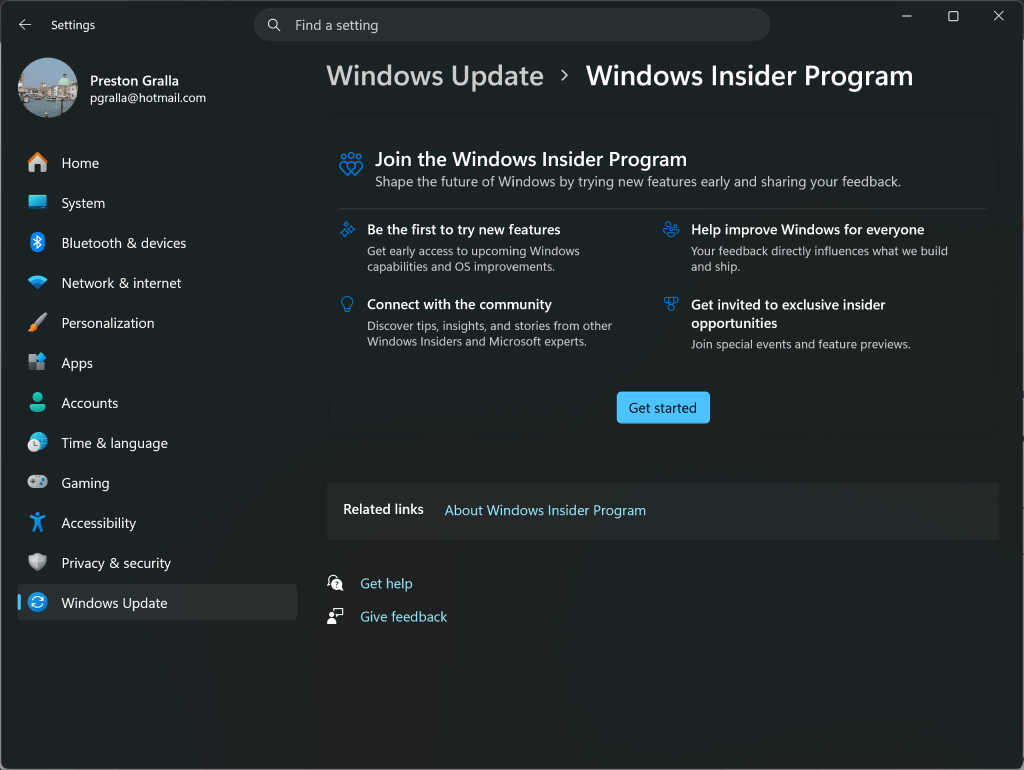
To configure a PC to receive Insider updates, open its Settings app, choose Windows Insider Program > Get started, and follow the instructions. When you click the button, you may get a message saying you need to link your Microsoft account to the Windows Insider program — follow the simple instructions to do it.
Note: Microsoft requires that you allow your PC to send specific diagnostic data to Microsoft if you want to test Insider builds. To enable this, go to Settings > Privacy & security > Diagnostics & feedback, then in the “Send optional diagnostic data” section, move the slider from Off to On.
When you’ve done that, go back to Settings > Windows Update > Windows Insider Program and you’ll have several choices to make. First, choose which Insider channel you want to use. There are three:
-
Experimental channel: This is where Microsoft first releases new features and ideas, which frequently have long lead times and won’t soon end up in Windows. Many features tried out here never make their way into Windows. Microsoft says this channel is best for “tech enthusiasts” and warns: “You should expect some rough edges and variable stability in this channel.”
-
Beta channel: If you don’t like the risks of living in the fast lane but still want to see updates before the general public, choose the Beta channel. This gives you a preview of fixes and new features that have been tested but are not quite ready for prime time. Microsoft describes it this way: “The Beta channel is for early adopters and IT professionals who want to see what we plan to ship in the coming weeks and validate the latest Windows updates and features, but still need reliable updates.”
-
Release Preview channel: This channel gives you and IT admins a chance to preview an upcoming Windows update before it’s released to the general public — essentially the final version of the update that will go out to the public in a few days. By default, the Release Preview channel doesn’t appear as an option when you’re choosing a channel. To make it appear, click the down arrow next to “Advanced options” and move the “Show Release Preview” slider to On.
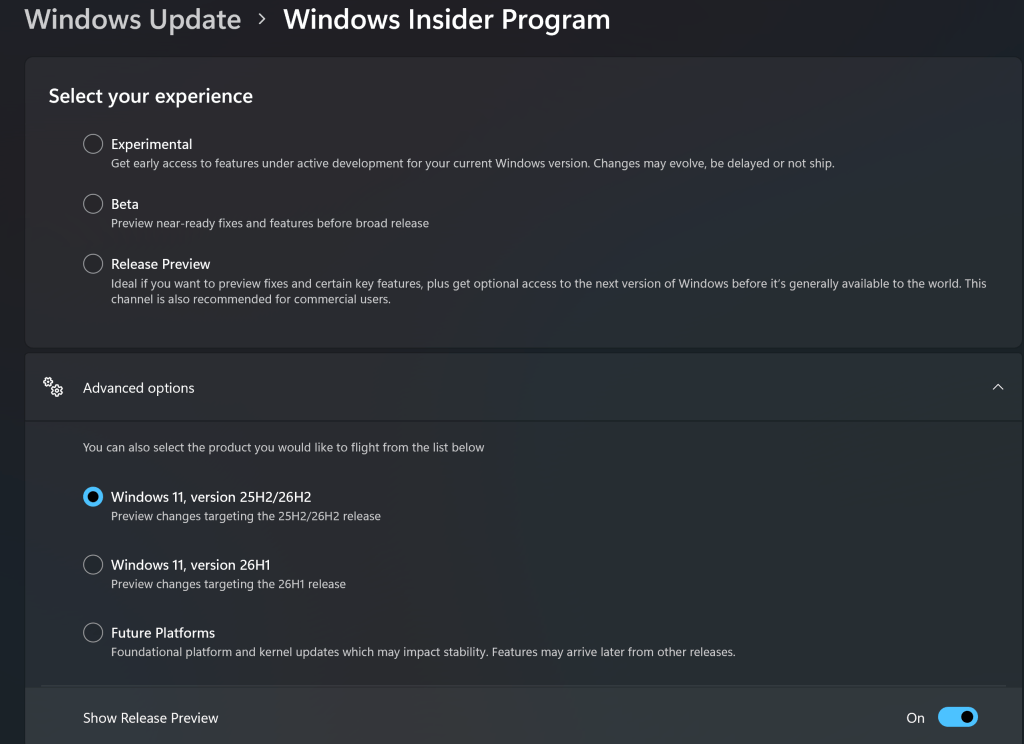
Once you’ve chosen a channel, make sure you’re selecting updates for the right version of Windows 11. Click the down arrow next to “Advanced options” and choose a version. These are the options currently available, which will change as new versions of Windows roll out:
-
Windows 11, version 25H2/26H2: This option covers Windows 11 25H2, the standard version of Windows 11 that most people have now, and its successor, Windows 11 26H2, which is beginning to roll out. This is the selection most people will likely make.
-
Windows 11, version 26H1: This is a separate branch of Windows 11 from the mainstream 25H2/26H2 and is only for people who have PCs with Qualcomm Snapdragon X2 Series processors purchased in 2026. People with 25H2 or 26H2 can’t switch to version 26H1 because their hardware won’t support it, and those with 26H1 can’t switch to 25H2 or 26H2.
-
Future Platforms: Available for Windows 11 25H2/26H2 and 26H1, but only if you’re in the Experimental channel. Aimed solely at developers and highly technical users, it’s the bleeding edge of Windows and can be highly unstable. Microsoft notes: “This build core version is aimed at highly technical users who want to preview platform changes that require a longer lead time before release. Examples include major changes to the Windows kernel and new APIs. The builds released to Future Platforms represent platform changes early in the development cycle and should not be seen as connected to any specific retail release of Windows.”
If you choose one of the latter two options, you’ll be placed in a specialized channel. For example, choosing Experimental and the standard Windows 11 version puts you in the main Experimental channel, but choosing Experimental and Future Platforms puts you in a channel called Experimental (Future Platforms).
Test Builds and Provide Feedback
Whichever channel you choose, you’ll begin receiving updates for that channel through Windows Update. Each build is documented with release notes in the Insider Flight Hub. Microsoft’s Windows Insider Blog typically announces each batch of new builds as they roll out, with direct links to the release notes for each channel’s latest build. Testing those builds and submitting feedback is how the Insider program delivers value — both to Microsoft refining its software and to participants who want a say in shaping Windows before it ships.