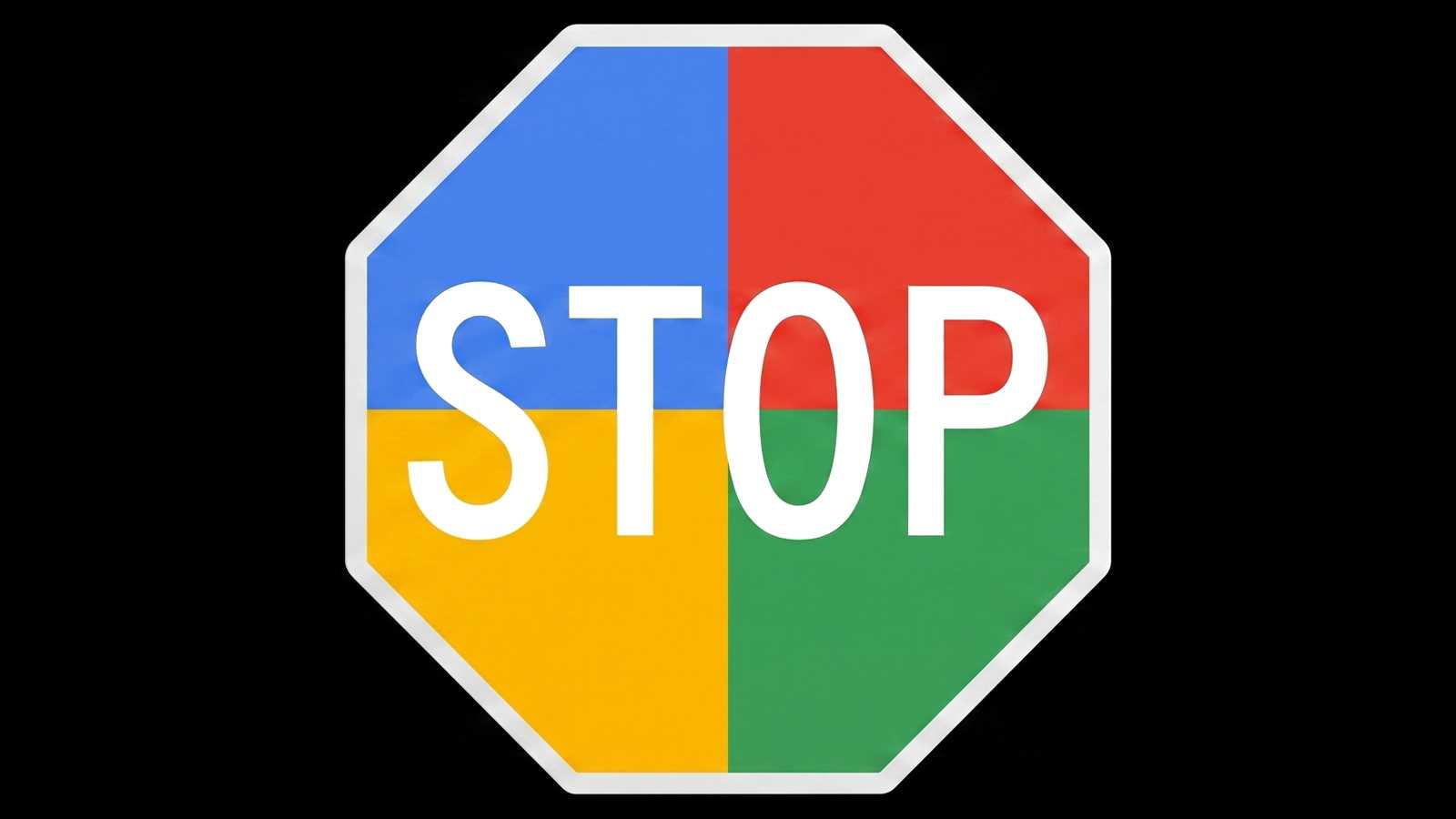
Chatting with readers and regular folks in the real world these days, I can’t help but notice a common theme anytime the topic of AI comes up.
It’s an almost amusingly extreme contrast: While the myopic world of tech people (and the type of mostly AI-powered “thought leaders” you see posting in turbo-speed on LinkedIn) are waxing endlessly about AI’s amazing impact on society and all the ways it’s, like, totally revolutionizing workflow, bruh, the average human’s take on AI can best be summed up with a single word:
Exasperation.
With shockingly little exception, almost every non-tech-obsessed organism I interact with reacts with something between an eye-rolling sigh and a fed-up facepalm whenever the prevalence of AI arises. It’s almost like having an on-demand in-person GIF gallery of “frustration” available at your fingertips — just mention AI, and you’ll get a meme-worthy reaction from anyone around you.
It’s such a dramatic divergence from the glowingly excited hype we hear left and right from the tech industry itself and the seemingly small but vocal group of overly enthusiastic evangelists who create an echo chamber around it. And that very contrast — the disparity between what tech companies are giving us and what tech users actually want — led me to a bit of an epiphany: AI may well be creating a killer feature that people will be willing to pay to possess. It’s just not the one most AI-fixated entities are focused on creating — quite the opposite, in fact.
The AI Availability Irony
In many ways, Gemini — Google’s generative AI chatbot and overall AI layer — is the new Google+.
It’s a solution in search of a problem. No one is asking for it, and most typical tech users increasingly seem to find its presence actively irksome and invasive — and yet Google continues to insist on shoving it into our faces at every possible opportunity. More and more with every passing week, the company is adding AI elements into almost every app and service regardless of whether they’re actually helpful in that context. In many cases, they’re unnecessary, useless, even outright creepy and creating very real problems and liabilities for businesses and individuals alike.
It’s not just Google, of course. The same tale is taking place with practically every tech provider big and small right now. Everyone is cramming AI into every nook and cranny and thinking more about the idea of integrating artificial intelligence — mostly just for the sake of having it there — than creating an optimal experience for the people who actually use those services.
That, in turn, is creating a whole new category of productivity experience that people are actually lining up to pay for — a premium feature of sorts, related to AI and its presence in our lives.
Ready for the most delicious irony of all? The killer AI feature of which we speak is a lack of AI — or at least the ability to disable and avoid it and use it only if and when you want.
A Measurable Trend
It’s not just an anecdotal feeling. It’s a measurable trend that may still be in its infancy but is absolutely taking shape around us.
Take, for instance, Kagi — an ad-free, privacy-centric search service that’s been quietly building a viable alternative to Google Search for several years already. The proposition is simple: you pay a monthly fee — five bucks a month for limited use or $10 for unlimited searching — and you get a search engine that’s designed to serve you instead of revolving around the interests of advertisers and corporate AI initiatives.
The Kagi search experience is clean, simple, and effective — and, most notably, free from all the often accuracy-challenged AI-generated “answers” that are now plastered atop most Google searches. You just get the results you want, without any experience-harming interruptions or distractions — because you’re paying for the service. Those five or 10 dollars you send over each month restructure the entire relationship and ultimately change everything about the service’s trajectory.
When a profile piece about Kagi ran last February, the service boasted 38,000 paying subscribers. Today, according to Kagi’s public stats page, its subscriber base has nearly doubled — to 72,847 users as of this writing.
It may still be a drop in the bucket — and it may always be a niche demand in the grand scheme of the global tech picture — but it represents a rapidly growing one. And Kagi isn’t the only player seeing both the demand and the resulting opportunity. Practically every time Google pushes AI further into its search setup, the privacy-focused (and AI-optional) search provider DuckDuckGo reports a surge in its own adoption as well.
Beyond Search
Search isn’t the only arena where this same sentiment is starting to boil over. Folks are growing ever-more frustrated with unavoidable AI integration in other productivity tools, ranging from email to notes and even plain document writing. A recent study by Automattic (the company behind WordPress) found 60% of people say AI in a brand’s messaging is more of a turnoff than a feature. A separate, more narrowly focused poll of Android Intelligence newsletter readers found that only 9% said they generally loved the presence of AI results in regular web searches — with 26% outright hating it and 64% saying it depends on the situation but that they at least sometimes find it more annoying than useful.
So as company after company crams AI into everything and startup after startup jumps on that same bandwagon, the more interesting question is less about what the next big advancement in AI will bring and more about what opportunities the lack of AI — or at least the ability to limit its influence and decide for yourself how and when you actually want to use it — will create.
It’s easy to imagine services like Kagi and DuckDuckGo expanding to offer AI-free or AI-optional alternatives to apps being overrun with irritating integrations — things like Docs, Notion, Slack, and any number of design tools. And it’s equally easy to imagine plenty of people and organizations being enticed by that lack of AI as a premium feature worth paying to experience.
It may inevitably remain a relatively niche market compared to mainstream tech solutions. But for people and organizations woefully underwhelmed with the current direction tech is taking — and willing to shell out cash for quality — it’s an intriguing notion, and an area well worth watching as AI continues crashing into every last corner of our digital lives.